Christmas Theme Fabric Seamless
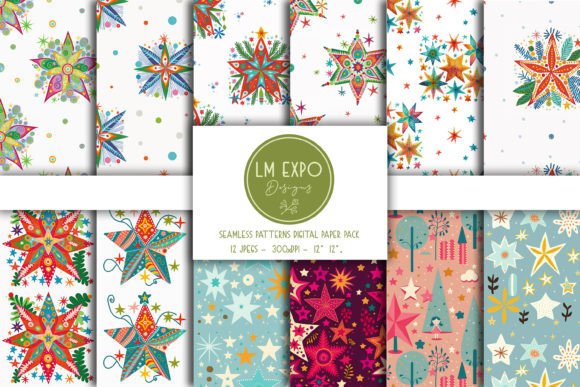
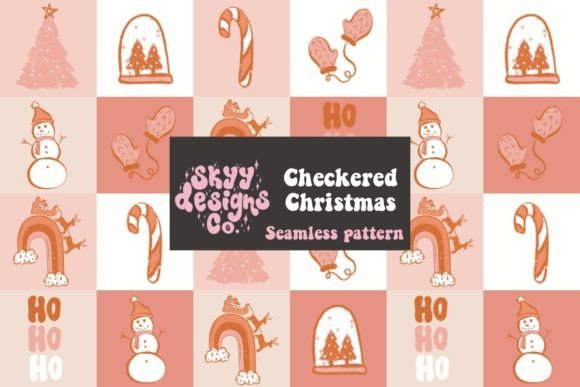
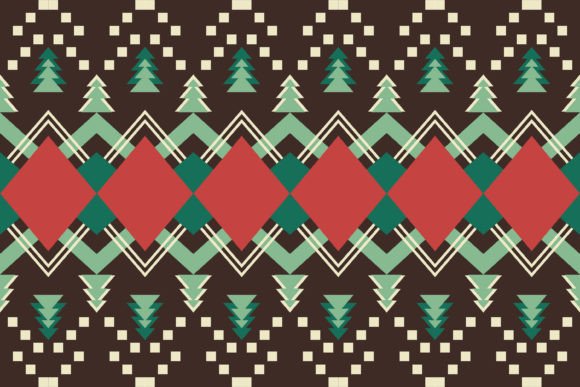
Christmas Theme Fabric Seamless refers to a category of high-resolution, repeatable digital pattern files designed specifically for holiday-related creative work—blending traditional festive motifs with textile-inspired structure and ethnic design sensibility. Unlike static holiday graphics or generic snowflake borders, these patterns are built as true seamless tiles: they repeat infinitely without visible seams, making them functionally robust for large-scale applications like wall murals, fabric printing, or website backgrounds. What sets this particular collection apart is its intentional fusion of Aztec pixel aesthetics—clean geometric shapes, stepped motifs, and rhythmic symmetry—with classic Christmas iconography: stylized holly, pine boughs, ornaments, stars, and subtle Nordic or Scandinavian inflections—all rendered in an ethnic-oriental visual language.
Design Integrity and Technical Execution
The collection delivers patterns at 6000 × 4000 pixels, 300 DPI, in PSD, JPG, and PNG formats. This resolution ensures crisp output across both physical and digital mediums—from letterpress shop tags printed on kraft paper to full-wall vinyl wallpaper installations. The PSD files retain layered structure, allowing designers to adjust color palettes, isolate elements, or tweak contrast without degrading quality—a practical advantage over flattened raster assets. Each pattern maintains consistent tile alignment; tested repeats show no misalignment, ghosting, or edge artifacts even after five consecutive horizontal and vertical repetitions in Adobe Illustrator and Affinity Designer. That consistency matters when scaling to 3-meter-wide fabric bolts or wrapping paper rolls—where a single seam break can compromise production.
Functional Versatility Across Creative Workflows
Christmas Theme Fabric Seamless isn’t limited to seasonal decor. Its geometric foundation gives it unusual adaptability. A designer developing branding for a boutique gift shop might use the Aztec pixel variant as a subtle background texture beneath product photography—adding warmth and cultural resonance without competing with foreground content. Educators creating printable holiday activity sheets benefit from the clean line work and generous negative space, which supports legible typography and child-friendly coloring zones. Small business owners producing handmade ornaments or ceramic mugs can embed the pattern into vector-based decals, then export at scale without interpolation blur. Even embroidery digitizers find value here: the pixel-based geometry translates predictably into stitch maps, especially for cross-stitch or crewel interpretations where motif repetition aligns naturally with grid-based stitching logic.
Color and Cultural Nuance
These patterns avoid clichéd red-and-green saturation. Instead, many variants use earthy ochres, deep indigos, charcoal greys, and muted forest greens—colors that echo traditional batik dyes, Andean weaving palettes, or Japanese boro textiles. That restraint expands usability beyond December: a coffee roaster launching a “Winter Solstice Blend” could deploy the same pattern year-round in packaging, subtly evoking seasonality without locking into overt Christmas associations. The ethnic-oriental influence isn’t decorative appropriation—it’s structural borrowing. Stepped triangles, interlocking diamonds, and border bands follow established craft traditions, lending authenticity that resonates with audiences attuned to material culture. That depth helps differentiate projects in saturated markets where generic holiday vectors dominate.
Real-World Use Cases and Limitations
A freelance surface pattern designer recently used one of the Aztec pixel variants as the base for a licensed textile collection with a regional fabric mill. Because the tile dimensions matched standard loom repeat requirements (72 cm × 54 cm), minimal adaptation was needed before production—saving approximately 12 hours of manual tiling and testing. Similarly, a university art department integrated the patterns into a digital illustration course syllabus, assigning students to reinterpret motifs using Procreate brushes or vector tools—demonstrating how the asset serves pedagogical goals beyond decoration.
That said, limitations exist. The patterns assume intermediate familiarity with layer management and color mode conversion (RGB for screen, CMYK for print). Users working exclusively in Canva or basic photo editors may find the PSD layers inaccessible without exporting first. Also, while the 6000 × 4000px size accommodates most professional needs, those requiring ultra-large-format printing (e.g., 10-foot-tall retail displays) should verify output sharpness at 150% zoom before finalizing—some fine pixel detail may soften at extreme enlargement. And because the designs emphasize rhythm over realism, they’re less suited for photorealistic mockups or editorial illustrations demanding narrative specificity.
Audience Fit and Project Alignment
This resource serves creators who prioritize intentionality over convenience. It suits professionals who routinely balance aesthetic cohesion with technical constraints—graphic designers building brand systems, textile artists prototyping prints, educators developing culturally grounded lesson materials, or indie publishers crafting limited-edition stationery. It’s less ideal for users seeking plug-and-play clipart or one-click social media templates. The value emerges not in speed, but in fidelity: the ability to maintain visual continuity across touchpoints (e.g., matching wrapping paper, event banners, and email headers) without sacrificing design integrity.
Practical Integration Tips
- For fabric printing: Confirm with your supplier whether they require RGB or sRGB color profiles—and convert accordingly before upload. Most digital textile printers handle 300 DPI natively, but always request a test swatch.
- For web use: Export PNGs at 72 DPI and compress with TinyPNG or Squoosh to retain clarity while reducing load time. Avoid using full-size 6000px files inline on websites.
- For printables: Embed the pattern as a background layer in InDesign or Illustrator, then lock it before adding text or illustrations. This prevents accidental movement during layout adjustments.
- For embroidery digitizing: Trace key motifs using the PNG version in Wilcom or Embrilliance, then apply auto-digitize tools selectively—avoid applying them to the entire tile, as that often overcomplicates stitch paths.
Ultimately, Christmas Theme Fabric Seamless stands out not because it’s “festive,” but because it’s rigorously constructed for reuse. Its strength lies in reliability across contexts—whether applied to a hand-stitched quilt label or a Shopify store banner—without visual fatigue or technical compromise. For creators whose work demands both cultural resonance and functional precision, it offers a rare convergence: tradition translated into tool, not just ornament.