Outline Leaves Seamless Pattern: Clean, Versatile Line Art for Modern Creative Work
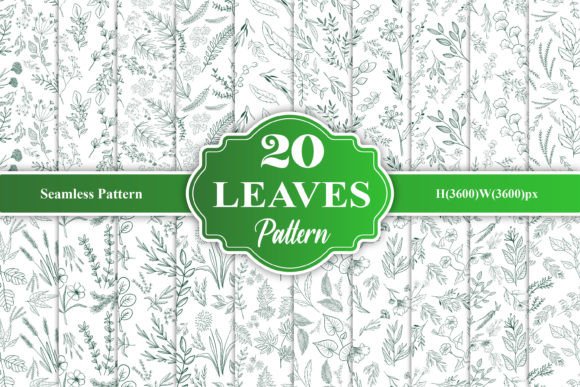
Minimalist botanical motifs are no longer just a passing aesthetic—they’ve become foundational tools for designers, makers, and brands seeking clarity, calm, and quiet sophistication. At the heart of this shift is the Outline Leaves Seamless Pattern: a collection of precisely drawn, hand-crafted line art leaves designed to repeat flawlessly across any surface. Unlike dense illustrations or photorealistic foliage, these patterns rely on confident strokes, balanced negative space, and intentional simplicity—making them unusually adaptable across physical and digital contexts.
Why Seamless Line Art Is Gaining Real Traction
Today’s creative workflows demand flexibility without compromise. A designer working on a wedding invitation suite may need the same motif to scale cleanly from a 5×7” printed card to a 48” backdrop banner. A small-batch apparel brand might apply the same leaf motif to organic cotton tees, reusable tote bags, and Instagram story templates—all while preserving visual cohesion. That’s where seamless line art delivers tangible value: it eliminates manual tiling, reduces production friction, and supports consistent brand expression across touchpoints.
This isn’t about chasing trends—it’s about responding to real shifts. Consumers increasingly associate clean line work with authenticity and intentionality. In packaging design, for example, a subtle outline leaf pattern on kraft paper conveys eco-consciousness without loud graphics. On social media, the same motif can anchor a calming story template—supporting mindfulness-focused brands or wellness educators who prioritize tone over clutter.
How Outline Leaves Seamless Pattern Fits Evolving Creative Needs
The rise of DIY branding, micro-businesses, and hybrid creative roles means more people are handling multiple aspects of visual communication—from logo mockups to print-on-demand product mockups to email newsletter headers. Professionals aren’t just choosing assets; they’re choosing systems that reduce repetition and decision fatigue. The Outline Leaves Seamless Pattern answers that need directly: 20 high-resolution JPG files (3600×3600 px, 300 DPI, RGB) mean users can drop them into Canva, Adobe Photoshop, Affinity Designer, or even Procreate without resizing compromises or pixelation.
What makes this set especially practical is its true seamless construction—not just “tileable enough,” but engineered for invisible repetition. That matters when printing fabric yardage or wrapping large-format wall decals. A misaligned tile becomes immediately visible at scale; a well-built seamless pattern stays invisible, letting the motif breathe naturally instead of drawing attention to technical limitations.
Real-World Applications—Beyond the Obvious
While fabric prints, wedding stationery, and gift wrap are natural fits, the versatility of these line art leaves extends further—often in ways creators discover only after downloading:
- Fashion apparel: Used as understated all-over prints on linen shirts or silk scarves—where subtlety reads as luxury, not minimalism by default.
- Homeware & textiles: Applied to ceramic mug decals or woven throw pillow designs—patterns hold up beautifully under screen printing and sublimation processes.
- Digital-first use cases: Blog headers gain visual rhythm without competing with text; social media story templates offer consistent framing for weekly content series; notebook covers provide tactile appeal for stationery brands launching limited editions.
- Educational & nonprofit materials: Teachers use the motifs in printable classroom posters; environmental NGOs integrate them into awareness campaign assets—clean line art signals approachability and clarity, not corporate sterility.
Importantly, these patterns don’t require advanced design skills to deploy effectively. A small business owner using Canva can layer one pattern behind text for a branded PDF guide, then reuse the same file for a printable workshop handout—no reformatting needed. That cross-platform reliability lowers barriers without sacrificing quality.
Technical Considerations That Actually Matter
Not all seamless patterns are built alike. Resolution, color mode, and tile logic affect usability far more than style alone. These files are delivered at 3600×3600 px—not arbitrarily, but because that size comfortably scales down for web use (e.g., blog headers at 1200×400 px) and up for print (e.g., 24×36” posters at 300 DPI). The 300 DPI specification ensures crisp output for professional printing services, while RGB color mode keeps them ready for screen-based projects without conversion delays.
And because they’re delivered as JPGs—not vectors or layered PSDs—they load quickly, open universally, and integrate smoothly into platforms with limited file-type support (like certain e-commerce site builders or email marketing tools). That’s not a compromise; it’s thoughtful format alignment with how people actually work today.
Shifting Expectations Around Pattern Use
A decade ago, pattern libraries were often siloed: textile designers used one set, web designers another, and crafters sourced from separate marketplaces. Today, boundaries between disciplines continue to soften. A freelance illustrator might design a capsule collection for a sustainable fashion brand—and also build their Shopify store visuals and Instagram highlight covers using the same visual language. Consistency isn’t just preferred; it’s expected.
That expectation reshapes how creatives evaluate resources. It’s no longer enough for a pattern to look beautiful in isolation. It must perform reliably across substrates (paper, fabric, vinyl), resolutions (mobile screens, billboard banners), and software environments (Figma, Cricut Design Space, Microsoft Word). The Outline Leaves Seamless Pattern reflects that reality—not by trying to be everything, but by doing a few things exceptionally well: precision, scalability, and quiet adaptability.
Practical Recommendations for Getting Started
If you’re evaluating whether this set fits your workflow, consider these grounded starting points:
- Start small: Apply one pattern to a single recurring asset—like an email signature background or printable checklist—before scaling to larger projects. This reveals how it interacts with your existing typography and color palette.
- Test contrast intentionally: Since these are line art motifs, legibility depends heavily on background choice. Try them on light neutrals first (ivory, soft grey, warm white), then test against deeper tones like charcoal or forest green—avoid black unless paired with generous spacing.
- Leverage repetition thoughtfully: A full-coverage seamless pattern works beautifully on fabric or wallpaper—but for digital interfaces, try using it at 10–20% opacity as a subtle texture behind key sections, rather than overwhelming the layout.
- Pair with complementary elements: These leaves thrive alongside sans-serif typefaces, muted palettes, and ample whitespace. They’re less suited to maximalist layouts or highly saturated color schemes—so lean into their natural restraint rather than fighting it.
Ultimately, the strength of the Outline Leaves Seamless Pattern lies in its quiet utility. It doesn’t shout for attention. It supports, frames, and unifies—whether you’re launching a new product line, designing a personal portfolio, or creating meaningful keepsakes for a milestone event. In a landscape crowded with visual noise, sometimes the most powerful design choices are the ones that simply work—across tools, timelines, and intentions.