Trendy Retro Rainbow Seamless Pattern
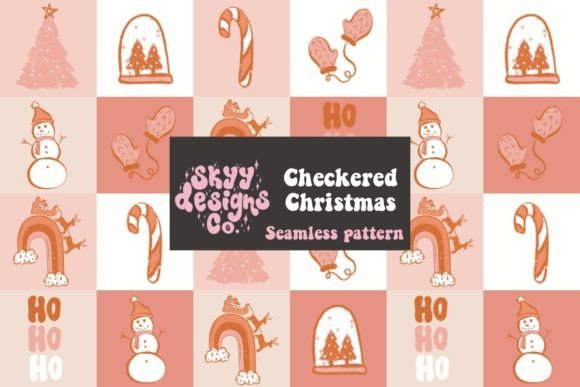
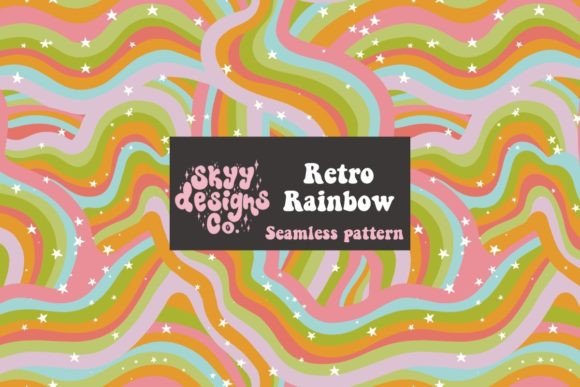
A Trendy Retro Rainbow Seamless Pattern isn’t just visual flair—it’s a functional design asset built for real-world creative workflows. At its core, it’s a digitally crafted, repeatable background where vibrant retro hues—think burnt orange, electric teal, buttercup yellow, and violet—flow across a 12×12 inch canvas at 300 DPI, with edges that align perfectly when tiled. Skyy Designs’ version delivers this as a single high-resolution JPEG file, optimized for print and digital use without visible seams or distortion. That precision matters—not as an aesthetic detail alone, but as a practical requirement for consistency across formats, scales, and outputs.
Where It Fits in Your Creative Process
This pattern doesn’t live in isolation. It enters your workflow at multiple decision points: during mood board assembly, before finalizing brand collateral, while prepping presentation decks, or even mid-project when you need to refresh visual energy without overhauling structure. For example, a freelance graphic designer might select the Trendy Retro Rainbow Seamless Pattern early in a rebranding project—not to lock in color direction, but to test how retro warmth interacts with typography hierarchy and iconography. A small business owner launching a new product line can drop it into mockups for packaging, social banners, and email headers simultaneously, ensuring visual cohesion before committing to physical production.
It also functions as a bridge between conceptual and executable work. Educators building online course slides often start with broad themes—“vibrancy,” “nostalgia,” “approachability.” The Trendy Retro Rainbow Seamless Pattern translates those abstract goals into something tangible and reusable. Once applied, it becomes part of a consistent visual language that supports learning retention—not through distraction, but through familiarity and rhythm.
Compatibility and Integration Across Tools
The 12×12 inch, 300 DPI JPEG format ensures broad compatibility. You can import it directly into Adobe Photoshop, Illustrator, Figma, Canva, Affinity Designer, or even PowerPoint without conversion. No plugins, no raster-to-vector translation needed. Because it’s a seamless repeat, scaling is intuitive: stretch it across a full-page document or shrink it to a subtle background texture—the alignment holds. This eliminates time spent manually adjusting tiles or troubleshooting misaligned edges, especially critical when working under deadline pressure.
It pairs predictably with other assets. Use it behind clean sans-serif type for contrast and readability. Layer it beneath semi-transparent shapes to mute intensity without losing character. Combine it with monochrome photography to add warmth without competing visually. Skyy Designs’ rendering avoids overly saturated gradients or complex noise, so it doesn’t clash with logos, icons, or data visualizations—even when overlaid with light text or UI elements.
Practical Implementation Tips
Start with purpose, not aesthetics. Ask: “What role does this pattern play?” If it’s for a printed brochure, confirm bleed and trim settings match your printer’s requirements—Skyy Designs’ 12×12 inch size fits standard US letter (8.5×11) and A4 layouts with room to scale. For web use, consider exporting a compressed version (e.g., WebP) after initial layout work—but keep the original JPEG for quality-critical outputs like merch or signage.
Test before committing. Drop the pattern into a representative layout—not just a blank canvas. Try it behind body copy, navigation bars, and call-to-action buttons. Adjust opacity (often 5–15%) if legibility suffers. Most design tools allow non-destructive blending modes; try “Overlay” or “Soft Light” to subtly enhance contrast without flattening the retro tone.
Organize it like a tool—not a decoration. Store the file in a clearly labeled “Textures & Patterns > Retro” folder within your asset library. Name it descriptively: Skyy_TrendyRetroRainbow_12x12_300dpi.jpg. Include a README.txt with notes on recommended use cases, compatible color palettes, and known limitations (e.g., “Avoid full-bleed use with thin black text below 10pt”). This saves future-you—or your team—time when revisiting projects months later.
Workflow Examples Across Roles
- Bloggers & Content Creators: Apply the Trendy Retro Rainbow Seamless Pattern as a background for Pinterest pins or Instagram story templates. Its rhythm supports scannability—readers absorb headlines faster against a structured, repeating base than against flat color or chaotic imagery.
- Small Business Owners: Use it to unify seasonal promotions—e.g., overlay it lightly on a “Summer Sale” banner, then reuse the same tile (at lower opacity) on product labels and thank-you cards. Consistency builds recognition; repetition builds trust.
- Educators & Trainers: Embed it into slide masters for workshop decks. When learners see the same subtle background across modules, it reinforces continuity and reduces cognitive load—especially helpful in asynchronous or self-paced learning environments.
- Freelancers & Agencies: Include it in client onboarding kits as a customizable template option. Offering one polished, on-brand pattern upfront signals attention to detail—and reduces back-and-forth about “background vibes.”
Long-Term Usability and Quality Control
Unlike trend-driven assets that age quickly, this pattern balances nostalgia with restraint. It references 70s and 90s color theory but avoids dated motifs (no flares, no pixelated sunbursts). That makes it adaptable—not just for one campaign, but across multiple product cycles, rebrands, or teaching semesters. To maintain quality over time, avoid repeated resaving in JPEG format. Keep the original file untouched; export derivatives only as needed.
Also consider accessibility. While the pattern itself isn’t interactive, its use impacts contrast ratios. Always verify text placed over it meets WCAG 2.1 AA standards (minimum 4.5:1 for normal text). Tools like Stark or browser extensions like axe DevTools can validate this quickly—especially important for educators publishing materials or marketers building landing pages.
Efficiency Gains You’ll Notice Immediately
Time saved isn’t theoretical. Designers report cutting background creation time by 60–80% when using a reliable seamless pattern versus building from scratch. Marketers reduce revision rounds because stakeholders respond more confidently to cohesive mockups than isolated concepts. Even hobbyists benefit: someone hand-making greeting cards or framing digital art gains professional polish without mastering advanced software.
That efficiency compounds. Once integrated into your system—whether via Figma libraries, Photoshop actions, or Canva brand kits—the Trendy Retro Rainbow Seamless Pattern becomes frictionless. You don’t reconsider it each time. You reach for it like a trusted brush or font pair. And that’s where real workflow maturity begins: not in chasing novelty, but in curating repeatable, reliable elements that serve your goals—not the other way around.
Final Thought: Integrate, Don’t Just Apply
Using the Trendy Retro Rainbow Seamless Pattern isn’t about adding color. It’s about embedding intentionality into repetition—choosing a visual rhythm that supports your message, your audience, and your timeline. Whether you’re sketching wireframes, preparing a grant application, designing merch, or building a portfolio site, this asset earns its place when it reduces decisions, accelerates output, and stays useful across contexts. Skyy Designs’ execution—clean edges, calibrated saturation, and scalable resolution—means it works now, and still works six months from now when your priorities shift but your standards don’t.