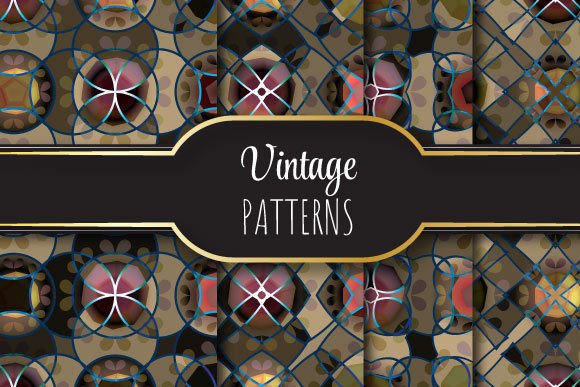
Vintage Mosaic
Vintage Mosaic refers to a curated digital asset pack built around authentic, hand-influenced tilework aesthetics—think Art Deco borders, mid-century ceramic repeats, and 1920s–1950s geometric motifs rendered with intentional texture, subtle irregularity, and restrained color palettes. Unlike algorithmically generated “vintage-style” patterns, this collection prioritizes visual cohesion and historical plausibility without sacrificing technical precision. It’s not nostalgia as decoration; it’s vintage language translated into production-ready vector and raster formats.
What You Receive—and Why Format Matters
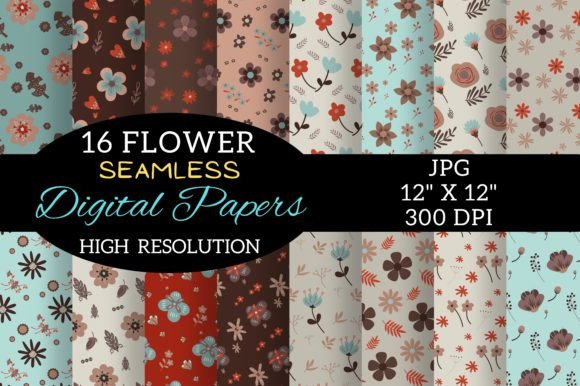
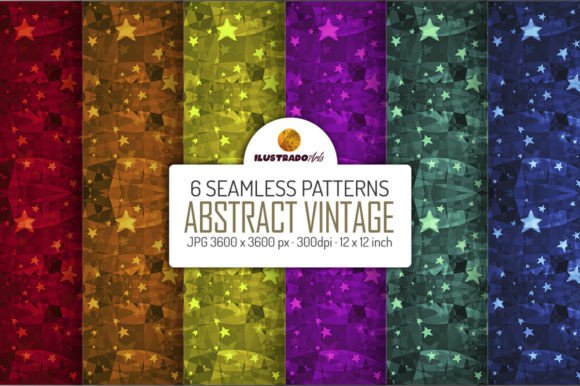
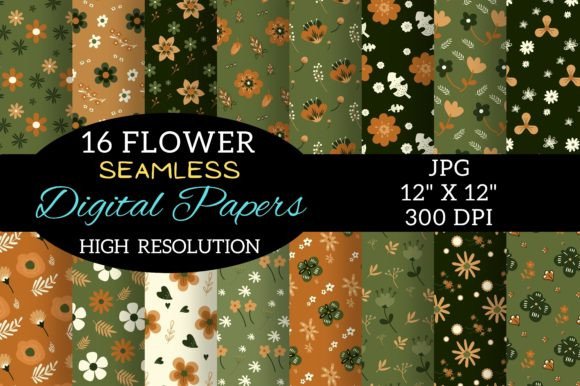
The package delivers one EPS 10 file and four JPEGs—all at 12 × 12 inches (3600 × 3600 pixels, 300 dpi). That uniform sizing isn’t arbitrary: it ensures consistency across print applications like stationery, packaging mockups, or textile swatches, while the high-resolution JPEGs support web use where vector rendering isn’t feasible (e.g., email templates, CMS-based blogs, or social media ads). The EPS 10 format guarantees backward compatibility with Adobe Illustrator CS6 and later, preserving layers, editable paths, and transparency—critical for designers who need to recolor, scale, or isolate elements without degradation.
The ZIP structure is minimal by design: no installers, no license portals, no forced accounts. Just one vector file and four raster variants—typically including full-color, grayscale, light-on-dark, and isolated motif versions. This reflects a practical understanding of real workflows: users often need both scalable vector fidelity and pixel-perfect JPEG fallbacks for client handoffs, platform uploads, or quick layout tests.
Seamlessly Repeating Vector Patterns: Function Over Flash
The core strength of Vintage Mosaic lies in how its patterns repeat—not just technically, but perceptually. Each EPS file contains a single, self-contained tile that aligns edge-to-edge with zero visible seams, even when scaled across large surfaces like wall graphics or fabric yardage. That seamlessness isn’t assumed; it’s verified through manual path inspection and tiling stress tests at multiple zoom levels. No hidden gaps, no misaligned anchors, no reliance on software auto-tiling to mask inconsistencies.
This reliability matters most when output shifts from screen to physical media. For example, a freelance packaging designer using one of these patterns for a craft beverage label can extend it across a 24-inch wrap without worrying about stitch lines appearing at the press stage. Similarly, an educator creating printable classroom posters benefits from predictable tiling behavior in both Illustrator and InDesign—no unexpected clipping or alignment drift during preflight.
Quality and Consistency Across Use Cases
At 300 dpi and 3600 pixels per side, the JPEGs hold up well for offset printing, fine-art giclée, or high-end brochure work—provided color management is applied consistently. They’re not oversharpened or artificially contrast-boosted, which avoids banding in gradients or muddiness in flat-color areas. The EPS retains clean Bézier curves, minimal anchor counts, and logical layer naming (e.g., “Base Tile,” “Accent Overlay,” “Texture Mask”), making edits efficient rather than forensic.
Consistency extends beyond individual files. All patterns share a common baseline: similar line weights, comparable saturation ranges, and harmonized contrast ratios. That means mixing two or more patterns in a single project—say, a vintage-themed wedding suite combining a border motif with a background repeat—doesn’t produce jarring tonal clashes or scale mismatches. There’s no “wildcard” file that breaks the visual contract.
Practical Flexibility Without Compromise
Vintage Mosaic works where many decorative pattern sets falter: in constrained contexts requiring both fidelity and adaptability. A small business owner updating their café’s menu board can drop a JPEG repeat directly into Canva, scale it to fit a 16:9 banner, and retain crisp edges. A marketer building a LinkedIn carousel can use the EPS to generate custom SVG icons with embedded mosaic textures—no loss of resolution at any size. A blogger illustrating a post on retro design history can export individual tiles as PNGs for annotated close-ups.
It also accommodates accessibility-aware workflows. Because the base motifs are geometric and low-noise—not overly busy or high-frequency—the patterns remain legible behind text overlays when used as subtle backgrounds. And since color variants are included, adjusting for WCAG contrast compliance (e.g., light text on dark tile) doesn’t require rebuilding from scratch.
Who Benefits Most—and Where It Fits Naturally
Professionals who regularly bridge analog sensibility with digital execution gain the clearest advantage. Graphic designers producing branding for heritage brands, boutique hotels, or artisanal product lines find immediate utility—especially when clients request “timeless but not cliché” visuals. Educators teaching design history or typography can use the motifs as case studies in rhythm, symmetry, and period-appropriate proportion.
Freelancers working under tight deadlines appreciate the lack of setup friction: no font dependencies, no missing links, no need to trace or vectorize scanned assets. Bloggers and content creators covering interior design, craft revival, or mid-century modern aesthetics get accurate, licensable reference material—not generic clipart masquerading as vintage.
That said, Vintage Mosaic isn’t optimized for maximalist digital art, generative NFT experiments, or UI interface elements requiring micro-interaction states. Its value is rooted in intentionality, not versatility at all costs. If your project demands rapid iteration across dozens of colorways or dynamic parametric variation, this isn’t the tool. But if you need two or three thoughtfully resolved, production-hardened patterns that behave predictably across mediums—that’s precisely its scope.
Real-World Limitations Worth Noting
There are no hidden features or expandable libraries bundled here. What’s delivered is what’s described: one EPS, four JPEGs, no extras. Users expecting AI-powered recoloring tools, Figma plugins, or animated variants will need to look elsewhere—or supplement manually. Likewise, while the motifs draw from documented historical sources, they aren’t archival reproductions: they’re interpretations refined for contemporary use, so scholars requiring primary-source accuracy should verify against original references.
Another consideration is scale dependency. These patterns shine at medium to large applications—wallpaper, fabric, signage—but may lose definition when shrunk below 2 inches square in print, especially in fine-detail variants. That’s not a flaw; it’s a function of their intended role. Using them as tiny UI icons would require simplification, which falls outside the package’s scope.
Making It Work in Your Workflow
Start by testing the EPS in your primary vector application. Open it, duplicate the tile, and build a 3×3 grid—then zoom to 400% and pan across seams. If alignment holds, you’ve confirmed baseline reliability. Next, import a JPEG into your preferred layout tool and overlay body text at 14 pt. Check readability and background contrast before committing to full-bleed usage.
For long-term value, treat the EPS as a master source: save derivative versions (e.g., simplified line-only variants or monochrome exports) with clear naming conventions. That preserves the original while building a lightweight library tailored to recurring needs. And because licensing is typically standard commercial use (verify per vendor), you can safely deploy across client projects without re-negotiating rights—assuming attribution isn’t required.
Vintage Mosaic doesn’t try to be everything. It solves a specific, recurrent problem—finding repeatable, historically grounded patterns that print cleanly, scale reliably, and integrate without friction—without overpromising or overcomplicating. When your goal is authenticity with executional clarity, not novelty for its own sake, it earns its place in the working toolkit.