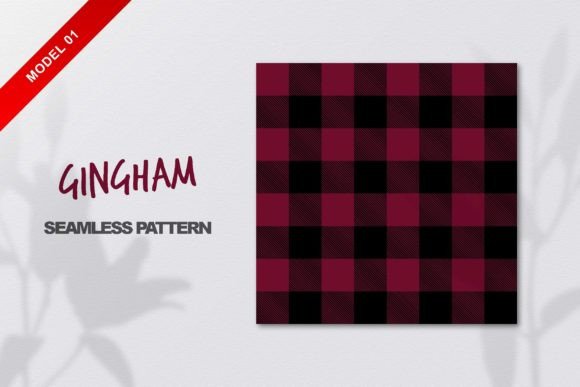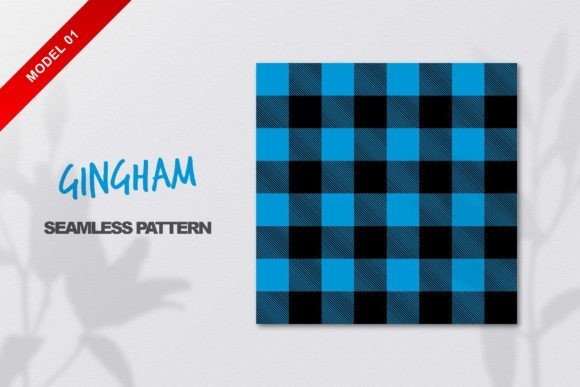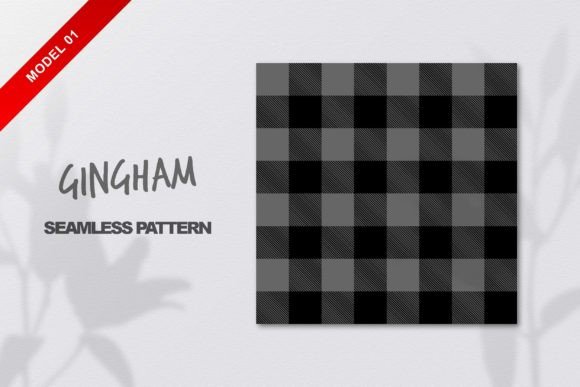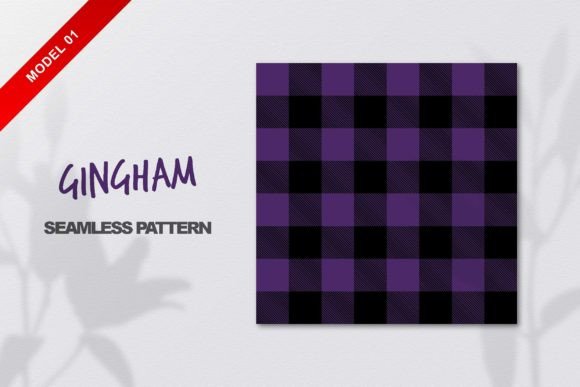
Purple Gingham Seamless Pattern
A Purple Gingham Seamless Pattern isn’t just another background—it’s a versatile, scalable design asset built for real-world use. Whether you’re designing packaging for a small-batch lavender soap line, creating social media templates for a boutique wedding planner, or building a cohesive brand identity for an indie stationery shop, this pattern delivers clean, consistent repetition without visible seams or pixelation. What sets it apart is its dual-format delivery: one EPS CC file (fully editable vector) and one high-res JPG at 4750 × 4750 px. That means you’re not locked into raster limitations—or forced to guess how it’ll scale.
Why “Seamless” Matters More Than You Think
Many designers assume any gingham-style tile repeats smoothly—until they stretch it across a large banner or zoom in on a product mockup. A truly seamless pattern aligns perfectly at all edges, so no matter how much you scale, tile, or rotate it, there’s no visible break in the grid. With this Purple Gingham Seamless Pattern, that seamlessness is built-in—not approximated. That’s critical if you’re printing on fabric, wrapping a mug, or designing a website hero section that spans ultra-wide monitors. Skipping this check leads to mismatched lines, faint ghosting at tile boundaries, or awkward cropping—and those flaws become glaring when printed or viewed on Retina displays.
The Vector Trap: Assuming “EPS” Means “Ready for Everything”
Yes, the included EPS file is 100% vector—but not all vectors behave the same way. Some EPS files embed raster elements, use outdated color profiles, or rely on fonts that won’t open cleanly in newer versions of Illustrator or Affinity Designer. This Purple Gingham Seamless Pattern avoids those pitfalls: it’s built with native vector paths, uses CMYK and RGB-safe purple tones (no neon surprises), and contains no linked assets or missing fonts. Before using it in production, open the EPS in your vector editor and check the Layers panel—look for grouped objects labeled clearly (e.g., “Base Grid,” “Color Overlay”). If everything appears as paths and swatches—not embedded JPGs—you’re good to go.
Resolution Myths: Why That 4750 × 4750 JPG Isn’t Just “Big Enough”
That high-resolution JPG isn’t just for show. At 4750 × 4750 px, it supports crisp output up to ~16" × 16" at 300 DPI—ideal for printed lookbooks, presentation decks, or digital ads where anti-aliasing matters. But here’s what people overlook: resolution alone doesn’t guarantee quality. If the original pattern wasn’t designed with precise spacing and consistent stroke weights, enlarging it reveals uneven checks, blurry edges, or inconsistent purple saturation. This version was constructed with mathematically uniform 8-pixel grid units and calibrated Pantone-adjacent purple values—so the JPG stays sharp *and* color-accurate whether used on screen or press.
Common Missteps When Applying Purple Gingham in Real Projects
Mistake #1: Using it as a full-background overlay on busy photos. Gingham competes with texture and detail. Try applying it as a subtle layer (10–15% opacity) behind clean typography instead—or crop it tightly to frame a product shot.
Mistake #2: Assuming “purple” means one shade. Purple ranges from muted heather to electric violet. This pattern uses a mid-tone, slightly desaturated purple (#6A4C93) that pairs well with cream, charcoal, sage, and warm wood tones—avoiding the “lavender overload” some beginners accidentally create.
Mistake #3: Forgetting repeat behavior in CSS or Figma. Even a seamless pattern can misalign if tiled with improper offset or scaling. In web design, use background-size: 100px 100px; (not auto) and test across breakpoints. In Figma, enable “Tile Scale” in the fill settings—not just “Fill” mode.
What to Verify Before You Download or License
- Check the color mode: Is the EPS saved in CMYK for print projects? Yes—this one is, with fallback RGB values embedded for digital use.
- Confirm scalability: Open the EPS and zoom to 400%. Do lines stay razor-sharp? No blurring, no pixelation—just clean geometry.
- Test tile behavior: Duplicate the JPG in Photoshop, place copies edge-to-edge, and zoom out. Look for color shifts, brightness bands, or alignment gaps—none should appear.
- Review licensing scope: This pattern is royalty-free for commercial use—including client work—but doesn’t permit resale as a standalone template or pattern pack. Always read the license summary before integrating into SaaS dashboards or white-labeled tools.
Better Choices Start With Clear Expectations
Choosing a Purple Gingham Seamless Pattern shouldn’t mean gambling on compatibility, color fidelity, or scalability. Too many free or low-cost options cut corners: inconsistent spacing, non-vector JPGs masquerading as “editable,” or purple hues that shift dramatically between screen and print. This version solves those issues by design—not as an afterthought. It’s built for creators who need reliability, not just aesthetics.
If you’re adapting it for packaging, try adjusting the base grid size in Illustrator (Object > Transform > Scale) to match your box dimensions—then re-export as SVG for web use. If you’re a teacher building classroom posters, drop the JPG into Canva, set it as a background, and lock the aspect ratio before resizing—no distortion, no guesswork.
And if something feels off—whether it’s unexpected color shifts in your PDF export, trouble opening the EPS in CorelDRAW, or uncertainty about how to recolor individual checks—don’t settle for workarounds. Reach out. As Mangata notes, questions are welcome. Clarity saves time, preserves quality, and keeps your project moving forward—not stuck in revision loops.
This Purple Gingham Seamless Pattern works because it respects your workflow: it’s precise, adaptable, and built to last beyond the first draft. Use it with intention—not just because it’s pretty, but because it performs.